 Payment Institution
Obtained Nexpay’s FCA Authorised Payment Institution licence.
WhatsApp and Telegram +44 7563 115980
[email protected]
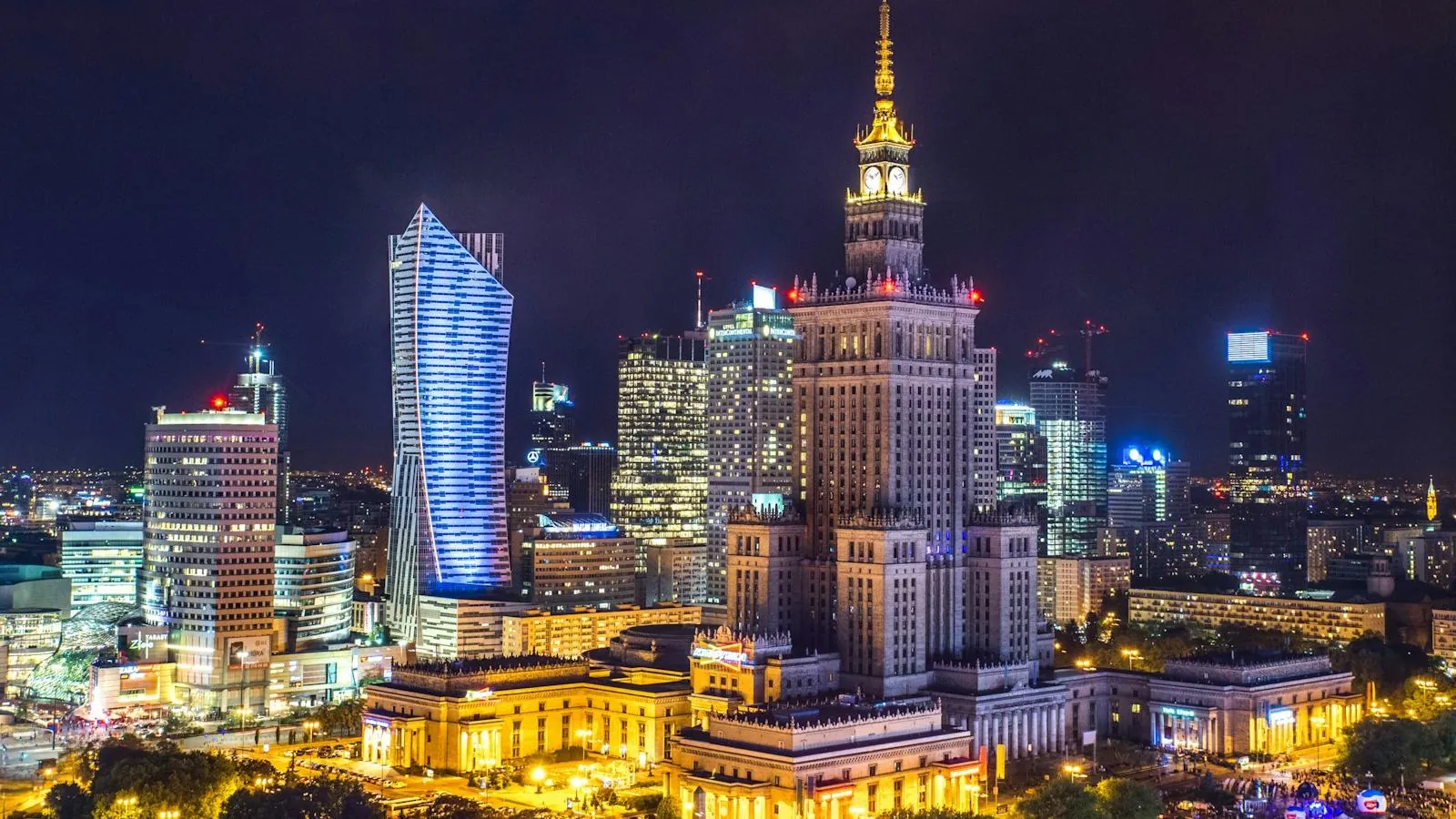
Poland, the largest payments market in central Europe, licenses payment and e-money institutions with an EU passport, and keeps a domestic register of small payment institutions for firms starting out.
Selected engagements from more than 250 licences obtained since 2013, for payment, e-money and cryptoasset firms.
 Volkswagen



 Payment Institution
Obtained Nexpay’s FCA Authorised Payment Institution licence.
 Electronic Money Institution
Obtained Dzing Finance’s FCA Authorised Electronic Money Institution licence.
Obtained Orbital’s FCA Authorised Payment Institution licence.
Our realistic timeline from submission to decision.
Safeguarding, operating and settlement accounts opened alongside the application, so you trade on authorisation.
We assemble your team: directors for the management board.
The licence, the requirements, the cost and the timing for your business.
You will need directors with the education and experience to run a payment firm prudently, and clean criminal, regulatory and court records.
One programme, from scoping to launch. Speak to an expert about this licence.
Requirements, capital, timing, fees and common questions, drawn from the regulator’s own publications.
A business providing payment services in Poland beyond the small regimes, or issuing e-money, needs a KNF licence. Poland is the largest payments market in central Europe and the KNF publishes its licence conditions, its process and its annual statistics in detail. A payment institution licence states the services covered, and adding a service requires a licence change. A business whose volumes stay below €1.5 million a month and which serves Poland only may register as a small payment institution instead.
| Type | Scope | Route |
|---|---|---|
| National payment institution (KIP) | Any payment service; EU and EEA passport | Licence |
| National e-money institution (KIPE) | E-money issuance and payment services; EU and EEA passport | Licence |
| Small payment institution (MIP) | All services except payment initiation and account information; Poland only; below €1.5 million a month | Registration |
| Payment services bureau (BUP) | Money remittance only; Poland only | Registration |
| Account information service provider (AISP) | Account information only | Registration |
At 31 December 2025 the KNF supervised 47 national payment institutions, 1 national e-money institution and 168 small payment institutions.
| Requirement | Amount |
|---|---|
| KIP: account, card and other services (1 to 5) | €125,000 |
| KIP: payment initiation only | €50,000 |
| KIP: money remittance only | €20,000 |
| KIPE: e-money institution | €350,000 (EU requirement) |
| KIPE: ongoing own funds | 2% of average outstanding e-money (EU requirement) |
| MIP: small payment institution | No initial capital stated |
Figures in euro are converted to złoty at the National Bank of Poland rate on the licence date. The KIPE figures are the EU requirement under the Electronic Money Directive; the Polish statute applies them.
| Figure | Value | Source |
|---|---|---|
| Statutory decision period | 3 months from receipt of the application or its supplement; the period is extended by the time taken to supplement documents | Payment Services Act of 19 August 2011; KNF, review of the application |
| Regulator’s published figure | 28 KIP licence proceedings in 2025, 2 licences granted, 8 discontinued, 1 refused and 17 pending at year end; no duration in months is published | KNF activity report 2025, Table 7 |
| Application preparation | 6 to 8 weeks | From instruction to submission, including banking in parallel |
| Our realistic timeline | 9 to 12 months after submission | Our own figure, from the regulator’s published data and our applications |
Regulator figures are quoted as published and converted to months. Our realistic timeline assumes a complete, well-prepared application.
| Item | Amount | Notes |
|---|---|---|
| Licence fee (KIP or KIPE) | €1,250 equivalent | Paid in złoty within 14 days of the decision |
| Licence change | €400 equivalent | Adding or changing services |
| Passport registration | €400 equivalent | Per branch, agent or cross-border notification |
| Annual supervision contribution, KIP | Up to 1% of the own funds figure | Rate set yearly by the KNF; due 30 November |
| Annual supervision contribution, KIPE | Up to 0.075% | Due 30 November |
| MIP registration | PLN 616 | Stamp duty; PLN 17 for a power of attorney; annual contribution up to 0.025% of prior-year transactions, due 30 June |
| Professional fees | Fixed | Quoted after scoping |
A natural or legal person whose monthly average of payment transactions over twelve months, including agents, stays below €1.5 million may register as a small payment institution. It provides every service except payment initiation and account information, in Poland only, including through branches and agents, with no passport. The KNF registers within three months of a complete application, the stamp duty is PLN 616, there is no initial capital stated and activity may start on the date of registration. The KNF refuses registration where the application stays incomplete after a cure request or the data is untrue, and must refuse where a court bars the applicant or it was struck off for a KNF prohibition within three years.
A national payment institution or e-money institution passports throughout the EU and EEA by branch, agent or cross-border services. The KNF forwards the notification to the host authority within one month and registers the activity after 30 days without objection; the registration fee is the equivalent of €400. A small payment institution serves Poland only. A limited network operator notifies the KNF above €1 million of transactions in twelve months.
The KNF publishes its licence conditions and its statistics rather than a list of causes of delay. Its 2025 report shows 28 payment institution proceedings, 2 licences, 8 discontinued, 1 refused and 17 carried into 2026, and 3 e-money institution proceedings with none granted. We read those figures as follows.
A licence lapses if no payment service is started within twelve months or none is performed for six consecutive months.
A payment institution needs a safeguarding account, an operating account and settlement accounts in the currencies it serves. We open each alongside the application, so you trade from authorisation. See banking and payment processing.
Three months from the application or its supplement by statute, extended by every supplementation round. The KNF’s 2025 figures show 17 of 28 proceedings carried over the year end, so we plan for nine to twelve months after submission.
€125,000 for account, card and most services, €50,000 for payment initiation only and €20,000 for money remittance only, converted at the National Bank of Poland rate on the licence date; €350,000 for an e-money institution under the EU requirement.
The equivalent of €1,250, paid within 14 days of the decision, with €400 for a licence change or a passport registration and an annual supervision contribution capped at 1% of the own funds figure.
A small payment institution: a registration for firms below €1.5 million of monthly transactions serving Poland only, with every service except payment initiation and account information, PLN 616 stamp duty and no passport.
Yes. A national payment institution or e-money institution passports by branch, agent or cross-border services on notification to the KNF; a small payment institution serves Poland only.
A regulatory advisory firm to payment, e-money and cryptoasset companies since 2013, with more than 250 licences obtained in more than 60 countries. The firm builds licensed payment, e-money, crypto and stablecoin businesses: the licence, the team, the technology, the bank accounts and card issuing.
This guide is general information, not legal advice. Requirements and fees change, and the regulator’s own publications take precedence.
The licence, your team, banking and technology, delivered as one programme.